Assessment supports reflection and improvement in teaching and learning. At the Poorvu Center, we take a collaborative, practical approach to understanding educational experiences and using evidence to inform decisions. Explore our resources for classroom assessment, educational program assessment, and assessment of our own work.

Classroom Assessment
Classroom Assessment is the process through which instructors and students gather evidence of student learning and experiences in their course. The types of assessments used in classrooms vary and can serve different and often multiple purposes. They may be more formative in nature, allowing instructors and students to reflect on and adjust course structure or engagement during a given semester. These include examples such as mid-term feedback, asynchronous discussion posts, exit tickets, or drafts of projects. Classroom assessments can also be more summative in nature, taking the form of graded exams, final papers, projects, or presentations. No matter the format, classroom assessment provides feedback to instructors and students about what is learned in the course.
Educational Program Assessment
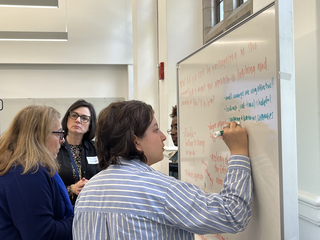
Program assessment extends beyond individual classes to consider broader educational initiatives and long-term projects. The Poorvu Center’s Educational Program Assessment (EPA) team provides expertise in developing, implementing, and analyzing assessments that explore the impact of teaching and learning programs on campus. We emphasize mixed-method approaches based in educational research to craft assessments that are aligned with a program’s goals, respectful of the context in which data are collected, and that provide actionable steps for programmatic change over time.
“Your presentation stood out for its innovation, applicability, and potential to advance the field of higher education assessment.”
RPA Best Scholarly Presentation Award, Assessment Institute in Indianapolis, 2025

Poorvu Center’s Own Assessment
The Poorvu Center relies on feedback from our community and colleagues to continuously improve our work. We intentionally build in mechanisms for center-wide feedback by establishing a faculty advisory board, student advisory board, external evaluations, and ongoing data collection from our offerings and events. Our team regularly reflects on this feedback to guide and structure our efforts. We also share our annual reports with the wider Yale community to demonstrate the many ways the center supports teaching and learning at Yale.
Participant feedback, usage data, and internal reflection help the Poorvu Center assess its work and guide improvement over time. Explore our annual reports to learn more about impact and priorities.
Explore Annual Reports