Yale’s postdoctoral community is a critical partner in the university’s research efforts. The Poorvu Center offers tailored resources and consultations to support your professional growth and development as an instructor. We look forward to working with you to prepare for a career in teaching.
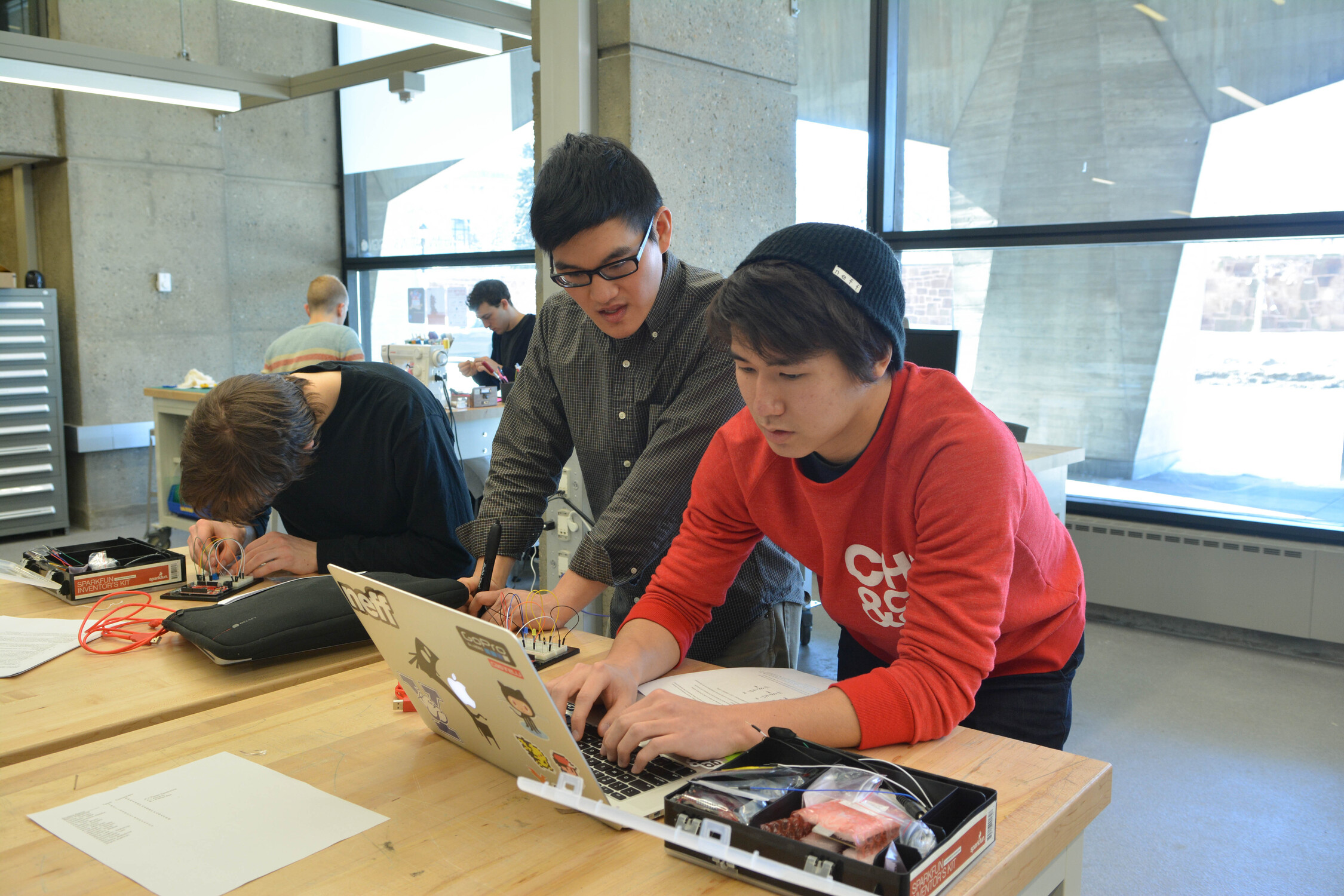
Certificate of College Teaching Preparation
The Certificate of College Teaching Preparation (CCTP) is an opportunity for Yale Graduate Students, Professional Students, and Postdoctoral Scholars to complete a comprehensive training program in effective college teaching. The goal of this certificate program is to equip Graduate Students and Postdoctoral Fellows with transferable skills that are valuable both on the academic job market and in a wide range of careers involving teaching and mentoring. The experience culminates in the production of a portfolio showcasing their teaching development.

Intermediate and Advanced Teaching Workshops
Programs to help postdoctoral and teaching fellows gain critical skills to transition into a faculty position.
If you are teaching regularly as an instructor-of-record, you may also find our faculty events series to be relevant and supportive of your teaching here at Yale.
Postdoctoral Scholars Teaching Communities
Structured space to share experiences, reflect on teaching practices, and refine ideas with peers and colleagues.
If you are teaching regularly as an instructor-of-record, you may also find our faculty teaching communities to be relevant and supportive of your teaching here at Yale.
Teaching Consultations and Observations
Confidential, individual consultations for you and a member of the Poorvu Center team to discuss course goals, semester plans, teaching practices, and course issues or concerns.
Teaching Programs
Specialized programs to support your teaching development with a focus on community-building and reflection.

Programs for You
-
Writing Workshops and Panels
Workshops, information sessions, and panel events to help you grow your writing practice and expand your writing and presentation skills.
-
Writing Resources for Graduate Students
A range of online writing resources, handouts, model texts, and writing exercises to help you grow as a writer.
-
Academic Job Search Workshops
Explore essential strategies for navigating the academic job market, from showcasing your teaching experience in an application to preparing for interviews with confidence.
-
Spring Teaching Forum
Designed to encourage interdisciplinary conversation and community, these events address timely topics about teaching at Yale, ranging from AI to grading.


Resources for Postdoctoral Scholars
-
- Teaching
A Guiding Framework for Teaching: Resource Page
Instructors can use the framework to guide their teaching choices about assignments, assessments, and classroom facilitation.
-
- Teaching
Active Learning
Active learning is instruction that creates opportunities for students to actively participate in the knowledge-making process.
-
- AI
- Teaching
AI Guidance for Teachers
A guide and list of Yale-related AI resources for faculty instructors interested in using or discussing AI in the classroom.

![Belet, E. (Emile). La végétation sous-marine. [1900]](/sites/default/files/styles/3_2_320/public/2025-09/veg_banner.jpg?h=731eaa0b&itok=K90uO6CI)
Upcoming Events
-
ITW: Curious Conversations
What makes a constructive conversation? How can curiosity shape classroom interactions and help us learn? This workshop explores theoretical frameworks for thinking through classroom conversations, analyzes how curiosity can foster meaningful dialogue and learning, and empowers participants with practical strategies for facilitating difficult conversations with confidence and care.
-
ITW: Mental Health in the Classroom (Online)
How do you respond when a student shares they are struggling with barriers that affect their ability to thrive in your classroom? With anxiety, depression, grief, or other illnesses and hardships? This workshop invites graduate student instructors across the disciplines to develop skills and strategies for supporting students’ mental health. We will learn how to apply principles of accessible d…
-
Faculty Fellows Event: Facilitating Complex Conversations in the Classroom
As instructors, how do we help students navigate controversial topics and discussions, especially those deeply intertwined with their lived experiences and identities? How do we know when to lean into hard conversations with our students? Please join us for a discussion about teaching across the disciplines with Tisa Wenger (Professor of American Religious History, Yale Divinity School, America…
-
ATW: Preparing the Teaching Portfolio
This workshop will cover the typical components of the teaching portfolio, the evidence of teaching excellence that is often required for academic jobs in the U.S. We will talk about how to gather the components of the portfolio—teaching statement, sample syllabi, course materials, and course evaluations—and how to annotate them so that the reader gets an overall sense of who you are as a teach…
-
Linked ITW-ATW: ATW - Care and Repair (2 Parts; 11/10 & 17)
As educators, we have an immense responsibility to cultivate student’s intellectual development, yet our position also offers a profound opportunity to foster care and connectedness. Opening learning spaces to authenticity and vulnerability can enrich the classroom community and establish a lasting practice of care in students and educators. This practice of care in turn promotes resiliency, be…
-
ITW: Collective Knowledge
Where do you know from? The goal of the workshop is to reframe our understanding of how knowledge is produced and shared in the classroom to consider ‘knowing’ a collective practice. The workshop will utilize pedagogical scholarship to help participants expand their teaching practice beyond traditional models of knowledge transfer. We will begin with a group reflection of our respective discipl…
-
ATW: Preparing the Teaching Statement (11/13/26)
How can your teaching statement offer a clear and compelling description of you as an instructor to future employers? This hands-on workshop offers strategies and suggestions on how to present your teaching principles and practices on the academic job market. We will review examples of successful teaching statements, explore the expectations of the genre, and discuss how to make the most of thi…
-
ATW: Course Design (2 Parts, Nov 12 & 19)
Designing your own course but don’t know where to start? Whether it’s your first time leading your own course or you’re just interested in improving your teaching, this two-part Advanced Teaching Workshop will walk you through where to start, what to focus on, and how to build an equitable and engaging curriculum. In this workshop, we will write learning objectives, design assessments, and buil…
-
ITW: AI in the Classroom (Registration Paused)
Generative AI has arrived in our classrooms, but what’s next? How do we have transparent conversations with our students about what these tools are and how or when to use them (or not use them)? In this workshop, we’ll discuss AI policy statements, Yale’s own AI tools and platforms, and how to center equity and accessibility in our conversations about AI for learning. Finally, participants …
-
Linked ITW-ATW: ITW - Care and Repair (2 Parts - 11/10 & 17)
As educators, we have an immense responsibility to cultivate student’s intellectual development, yet our position also offers a profound opportunity to foster care and connectedness. Opening learning spaces to authenticity and vulnerability can enrich the classroom community and establish a lasting practice of care in students and educators. This practice of care in turn promotes resiliency, be…
-
ITW: Universal Design for Learning
Does creating a rigorous classroom necessarily come at the cost of accessibility and equity? In this Intermediate Teaching Workshop (ITW), we’ll investigate the meaning of Universal Design for Learning, use this framework to identify the barriers present in the traditional classroom model, and explore ways to incorporate rigor without sacrificing access. If you have any questions, please contac…
-
ITW: Teaching International Students
While international students bring valuable perspectives and experiences to the classroom, they may also encounter academic and socio-cultural barriers shaped by unfamiliar institutional norms, language differences, and the hidden curriculum. In this Intermediate Teaching Workshop (ITW), we will examine common challenges international students face, reflect on how cultural and institutional dif…
-
Fundamentals of Teaching, Equitable Pedagogy (Online) (4 Sessions - 10/12, 19, 26, & 11/2)
Are you aiming to foster an equitable and supportive classroom environment? Are you hoping to design lesson plans, assignments/activities, and student feedback modalities that are accessible and engaging to a wide breadth of students? Reflecting on the historical and structural contexts of the classroom, in this four-part (online) series, we will learn to apply evidence-based teaching strategie…
-
ITW: Classroom Observation (Online - 11/2)
Would you like to improve your own pedagogy while supporting fellow instructors through classroom observation? This workshop will equip you with the tools to provide constructive, equitable feedback on the teaching of both your peers and your mentors across a variety of classroom formats. We also will review the observation requirements for the Certificate of College Teaching Preparation (CCTP)…
-
ATW: Lecturing for Active Engagement
How can we keep students engaged while delivering content efficiently in a large lecture class? In this ATW, we will explore strategies for enhancing lecture effectiveness that maintain student interest and promote active learning. Participants will develop practical tools and strategies for equitable and effective teaching and time management. We welcome teaching fellows and instructors at all…
-
ATW - Preparing the Teaching Statement (Online - 10/29/26)
How can your teaching statement offer a clear and compelling description of you as an instructor to future employers? This hands-on workshop offers strategies and suggestions on how to present your teaching principles and practices on the academic job market. We will review examples of successful teaching statements, explore the expectations of the genre, and discuss how to make the most of thi…
-
ITW: Mentoring Undergraduates (Online)
While mentorship is critical to researchers’ personal and professional development, effective mentorship is often a neglected facet of pedagogical training. In this Intermediate Teaching Workshop (ITW), we will discuss how to establish clear mentor-mentee expectations, support mentee career/research goals, and facilitate independent thinking. Finally, we will discuss equity in mentorship and ex…
-
LC: Disability Justice as Pedagogy (4 sessions - 10/28, 11/4, 11/11 & 11/18)
This learning community invites instructors from across disciplines to explore how the principles of disability justice can shape our teaching. We will start by introducing concepts and vocabulary from disability justice, drawing on readings from both the scholarly disciplines of critical pedagogy and disability studies, and from grassroots disability justice organizers and culture workers. We …
-
Fundamentals of Teaching, Sciences (Online) (4 Sessions - 10/28, 11/4, 11, & 18)
Are you interested in improving your science teaching skills this year? Join us in this four-part workshop on the Fundamentals of Teaching in the Sciences (online)! In this workshop, we will introduce pedagogical principles and tools you can use to improve student engagement in a variety of science classrooms. Participants will walk away with a comprehensive overview of the skills and tools nee…
We’re here to help!
Reach out to the Poorvu Center team if you have any questions or to learn more about our programs.