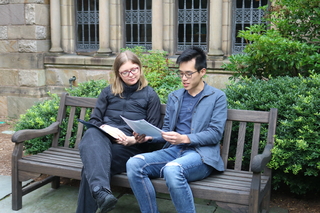
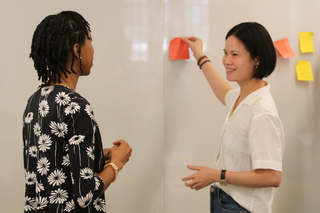
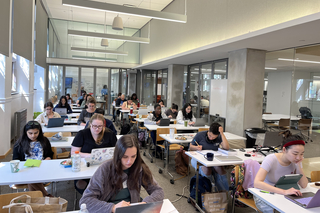
A facilitator leads a GWL peer-review group.

Starting a Writing Group

Create your own writing community.

Starting a Writing Group

“receiving feedback from colleagues” 

“being accountable to other people” 

“the mutual support and affirmation” 

“having deadlines” 

“having writing friends” 

These comments from GWL peer-review group members highlight the range of impacts a writing group can have. This page discusses the benefits and logistics of starting your own group. You can find information about GWL-organized writing groups on our Peer-Review Groups page.

This group has been the single most impactful part of my development as a writer in graduate school. I am so grateful for the wonderful community. It is so rare to find a space that supports and celebrates, while also strengthening and deepening research-in-progress. 

GWL Peer-Review Group Participant

Why Start a Writing Group? 

Writing groups can take a range of forms—from feedback to accountability to co-writing—depending on group members’ goals. Scholars typically join writing groups to boost their productivity, writing quality, and connection to other scholars. When forming a group, allow each member to share their goals. Then decide together on a meeting structure and activities that best support the needs of each participant. Possible activities for group meetings are described below. Once your group is up and running, you’ll want to make space for regular check-ins to ensure the meeting structure continues to meet each member’s needs. 

Productivity

Frequent, low-stress engagements with a writing project are the best way to avoid burnout and maximize long-term productivity. The structure of consistent group meetings—whether they include exchanging feedback, co-writing, or goal sharing—ensures you get just that.  

To enhance productivity, you might incorporate goal sharing into group meetings. Setting smaller, near-term goals has been shown to be more motivating than a far-off project deadline. And sharing goals with others increases accountability. At the end of each meeting, have each group member write down and share their writing goal for the next week. Then start each meeting with a check in where group members share progress made over the previous week. The GWL’s 12-Week Goal-Setting Worksheet further enhances productivity with space to schedule the times and places where you will write.  

Writing Quality

Feedback is essential to improving any piece of writing. Hearing a reader’s response to your work-in-progress can move your writing forward faster and more effectively than revising on your own. Just as importantly, regularly giving feedback on others’ writing can expose you to different writing processes and help you see your writing through a reader’s eyes. A writing group is an ideal space to build these feedback skills and enhance the quality of your writing.  

To incorporate feedback into your writing group, have a conversation early on about how to deliver feedback that feels productive and supportive. Group members should engage thoughtfully with the piece’s ideas and focus their feedback on the writer’s goals. See the GWL’s guide to Giving & Receiving Feedback for guidance on how to request and share feedback effectively and create a culture of trust in your feedback conversations.   

Connection

Academic writing can feel isolating. Connecting with others around writing can bring energy and focus to your process. And peers who know you and your work can support you through the challenges and pivots of a major project. Writing groups thrive when participants feel comfortable asking questions, presenting unpolished work, offering candid feedback, and sharing emotions around their writing process.  

To create opportunities for connection, build them into the structure and expectations of your group. Agree that unrevised—even messy—drafts are okay to present. When offering feedback, respond as a reader, sharing not just suggestions but your experience reading the draft. Make space for conversation on topics outside of the draft’s content, including goals, experiences, challenges, and breakthroughs. Add time for discussion of non-work-related topics to the structure of your meetings. 

Having to turn in work and talk about it, even though I wasn’t done, helped me avoid perfectionism and just get words on the page! 

GWL Peer-Review Group Participant

Setting Your Group Up for Success 

The success of a group is often determined by the structure and expectations established at the outset. These are typically worked out in the initial communications and during the first group meeting. During this startup phase, you’re seeking a plan for working together that accounts for everyone’s time and goals and ensures even participation from each member of the group. You may also want to set a future date to revisit your meeting plan to ensure it is meeting each member’s needs. 

Initial Communications

When approaching prospective members, offer some proposals about group format, focus, and logistics—with flexibility to revise these in response to members’ goals. The GWL’s Peer-Review Group Startup Emails provide a template for details to include. And the sections on logistics and format below offer options for structuring your group that address a range of needs. 

Each member’s commitment to a shared set of logistics and norms is essential for a sustainable group. Establishing how you will work together should be the central focus on the first meeting. During that meeting, have each member share their goals for the group and use those to generate a set of practices that meets everyone’s needs. The First Meeting Logistics for the GWL’s STEM Fellowship Groups offers a model for how to conduct your first meeting. And the sections below give you a list of topics to discuss. 

General Logistics 

For the sake of efficiency you’ll want to establish shared expectations for meeting locations, modes of communication, and leadership structure. Questions you might consider include: 

  • Where & when group will the group meet? (in-person location, Zoom, hybrid) 
  • Does the group have an end date, or is it indefinite? 
  • How many members will the group have? (4–6 is usually ideal) 
  • How will group members communicate? (email, group text, Slack, etc.) 
  • What is the leadership structure? Will one member send reminders, reserve rooms, facilitate discussion, etc.? Or will these tasks be distributed, rotate weekly, etc.? 

Exchanging Drafts 

To facilitate the exchange of feedback, group members will need to consider what kind(s) of work will be shared and how group members will share it. Questions to consider include: 

  • Will group members share just one kind of work—dissertation chapters, fellowship applications, job search materials—or any work in progress they’d like feedback on? 
  • What is the word or page limit on drafts? 
  • In what format will drafts be shared? (MS Word, Google docs, etc.) 
  • How far in advance of the meeting will drafts be shared? (At least 48 hours is advisable.) 
  • Will presenters highlight elements they’d like feedback on when sending drafts? (This is recommended.) 
  • What is the medium of feedback? (written, verbal, or both? Sentence-level editing or more general comments? Written feedback sent before, during, or after meetings?) 
  • How much time will each participant spend reading and preparing comments on each draft? (Essential for helping each member feel they’re contributing equally to the group.) 

Meeting Format 

The format of meetings should align with group members’ goals. GWL dissertation groups typically begin with a 10-minute check-in, followed by two participants receiving draft feedback for 30-minutes each, and conclude with 10 minutes of goal setting and goal sharing. But many groups adjust this structure to meet the needs of participants. Here are some common elements of peer-review groups you might consider building into yours: 

  • Exchanging feedback on drafts 
  • Goal-setting/sharing; progress updates 
  • Co-writing 
  • Talking about writing process / progress towards writing goals 
  • Strategizing or sharing writing resources 
  • Discussing model texts or expectations of the genre 
  • Writing a collaborative project 
  • Lightning round of feedback on very short drafts from each group member 

While you won’t be able to include all of these elements in your group, meetings will flow more smoothly if you build a few into your ongoing structure. Once your meeting structure is established, you can occasionally shift the formats of individual meetings for a change of pace (e.g. doing a lightning round of feedback every month or two). If plans change last minute, you can always shift to co-writing. 

Different perspectives from different strands in my research field have shed fresh light on my research and writing; also candid talk and a friendly & open atmosphere have made me feel included and part of the wider Yale community. 

GWL Peer-Review Group Member

Additional Resources

Sohui Lee and Chris Golde, “Starting an Effective Dissertation Writing Group.”

Douglas Stone and Sheila Heen, Thanks for the Feedback, Penguin, 2015. 

Paul J. Silvia, How to Write a Lot, 2nd ed, ch. 4 “Starting a Writing Group,” APA P, 2019. pp. 47–57. 

Joli Jensen, Write No Matter What, ch. 28 “Building Campus Writing Support,” U of Chicago P, 2027. pp 142–48. 

Rachael Cayley, Fiona Coll, and Daniel Aureliano Newman, eds., Writing Together: Building Social Writing Opportunities for Graduate Students, U of Michigan P, 2025. 

Still Have Questions?

For additional guidance on starting a writing group or help recruiting group members, contact GWL Director Ryan Wepler, Assistant Director Lauren Gonzalez, or email grad.writing@yale.edu.

Explore GWL Programs

  • Writing Consultations

    Get 1-on-1 feedback at any stage of the writing process—from brainstorming to final edits.

  • Workshops & Panels

    Interactive opportunities to grow your academic writing knowledge or expand your toolkit of skills.

  • Peer-Review Groups

    Groups of 4–7 students who meet weekly to share feedback, make progress, and support one another on a common project.

  • Writing Retreats & All Writes

    Full-day and half-day events where graduate students set goals and write as a community in a quiet, supportive space.

We’re here to help!

Reach out to the Poorvu Center team if you have any questions or to learn more about our programs.

Contact Us